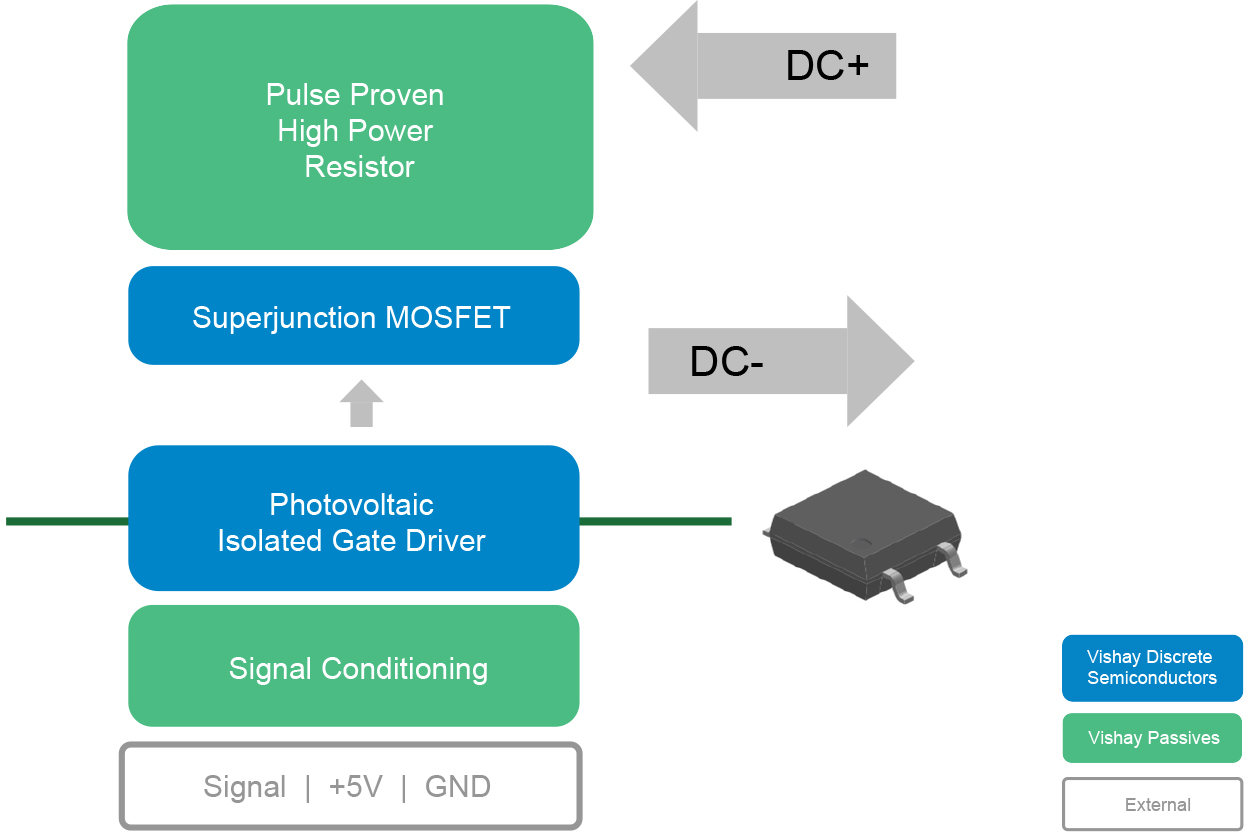







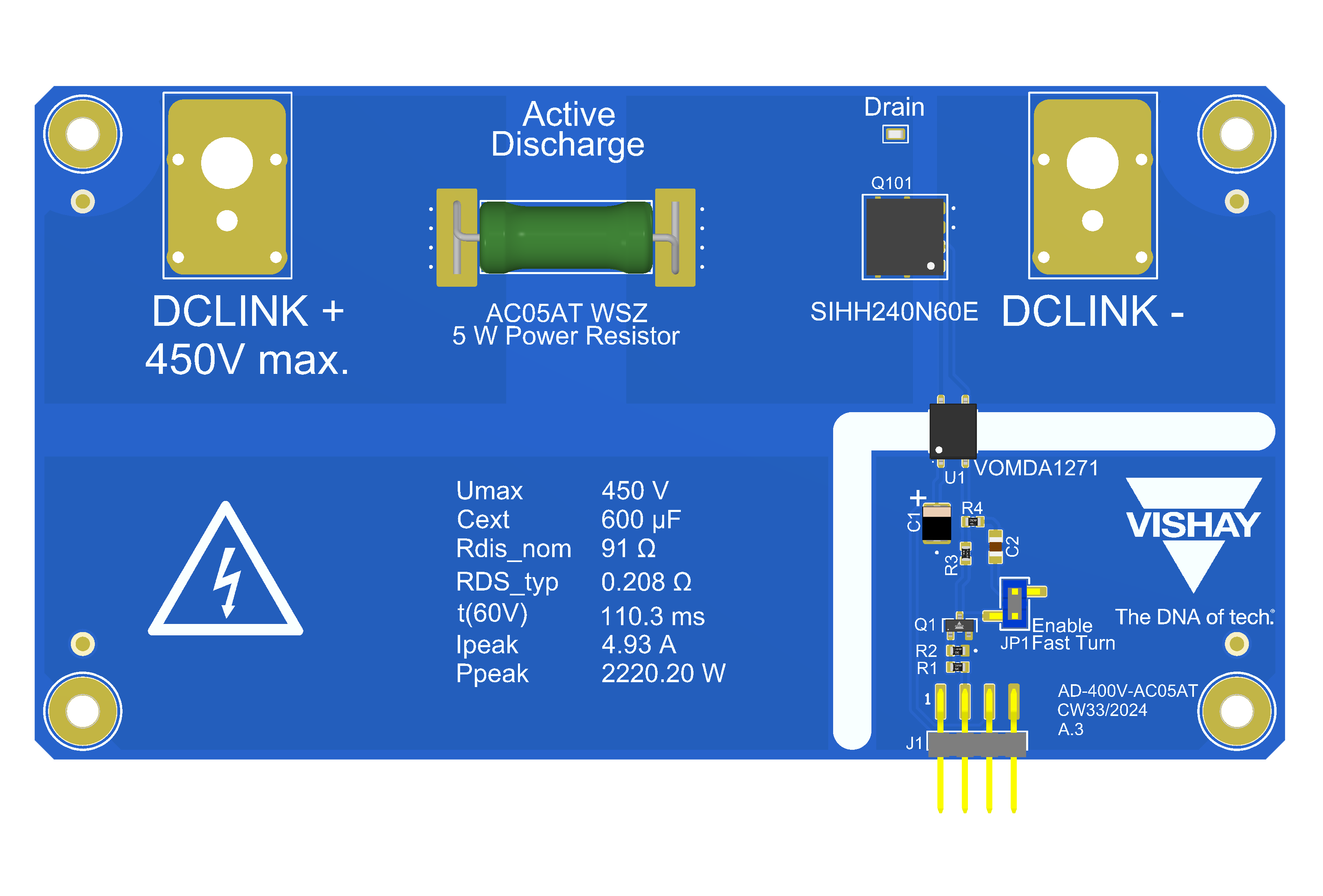
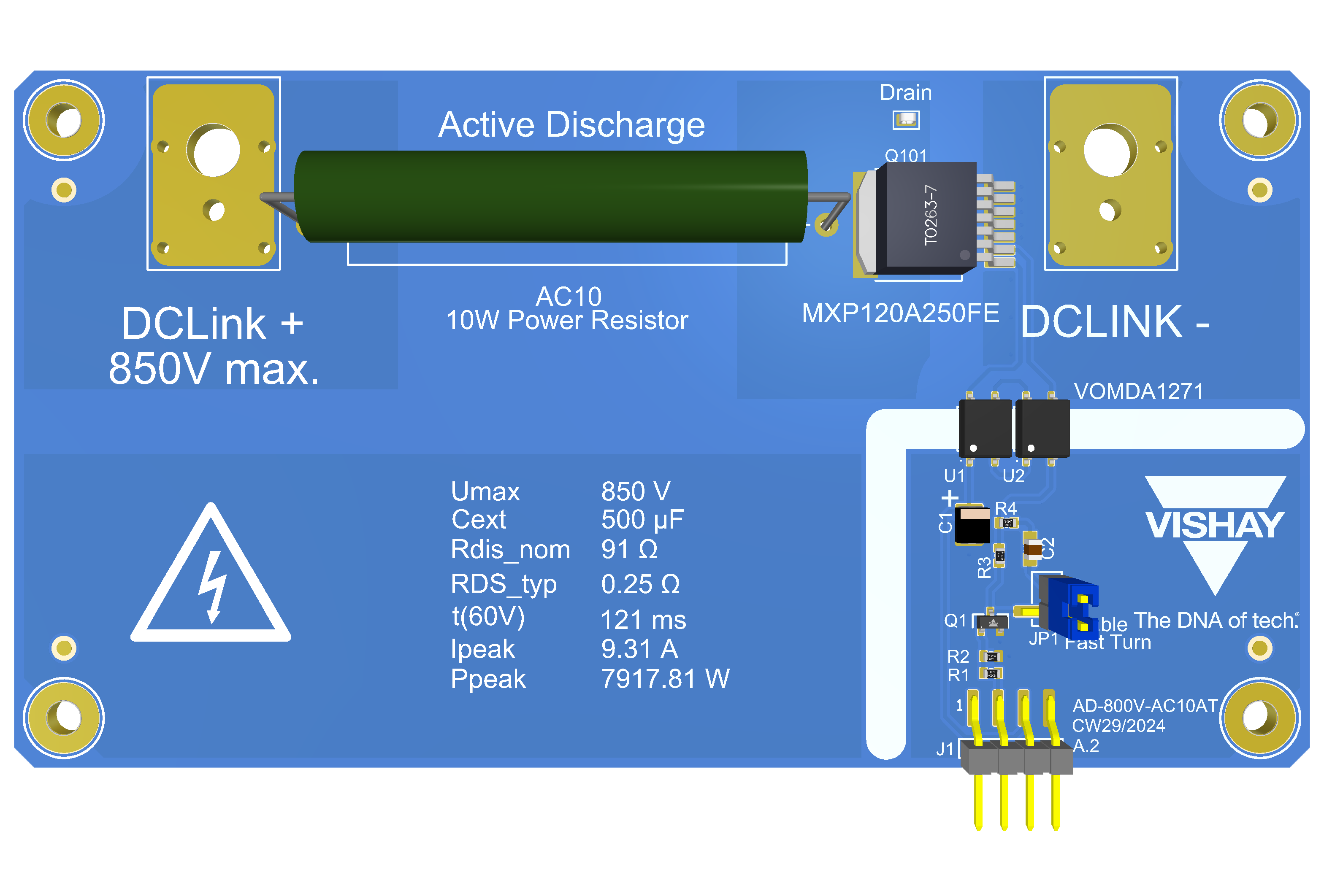
Active discharge is a method of discharging stored energy in a capacitor (or any other energy-storing element) in a controlled manner. This allows the system voltage to reach a safe value within a certain amount of time, thereby preventing the risk of electrical shock. Active discharge is distinguished from passive discharge or bleed resistors in such, that the discharge process is faster and actively initiated and therefore leads highe efficiency of the system during normal operation.
The solution uses an SiC MOSFET, driven by a photovoltaic gate driver, to enable discharge of a 800 V system through a pulse-prove resistor and can be easily tailored to the exact requriements.
Reference Design Files

- AD-800V
ZIP | Feb 19, 2025
Reference Board

Datasheet

- Active Discharge of 800 V DC-Link
PDF | Jan 8, 2025
Active discharge is a method of discharging stored energy in a capacitor (or any other energy-storing element) in a controlled manner. This allows the system voltage to reach a safe value within a certain amount of time, thereby preventing the risk of electrical shock. Active discharge is distinguished from passive discharge or bleed resistors in such, that the discharge process is faster and actively initiated and therefore leads highe efficiency of the system during normal operation.
The solution uses an SiC MOSFET, driven by a photovoltaic gate driver, to enable discharge of a 800 V system through a pulse-prove resistor and can be easily tailored to the exact requriements.
Reference Design Files
-
- AD-800V
ZIP | Feb 19, 2025
Reference Board
Datasheet
- Active Discharge of 800 V DC-Link
PDF | Jan 8, 2025